

Delivery model
Stay close to the problem from discovery through adoption
Requirements change when engineers see the real workflow, the systems around it and the exceptions people handle every day. Our delivery model keeps those details visible instead of freezing them inside an early specification.
Working model
What forward-deployed means here
Our engineers work closely with your product and operations teams to understand the problem in its real environment, build the appropriate solution, integrate it with existing systems and support adoption.
Forward-deployed engineers work close to the client's operational context and take part in defining the solution, not only implementing tickets. The model is useful when requirements are intertwined with workflows, data and existing systems. It does not mean sending engineers onsite by default.
Unfamiliar with the term? Forward-deployed engineering, explained without the jargon covers what it means in practice and when it is the wrong fit.




Process
Five stages, in the open
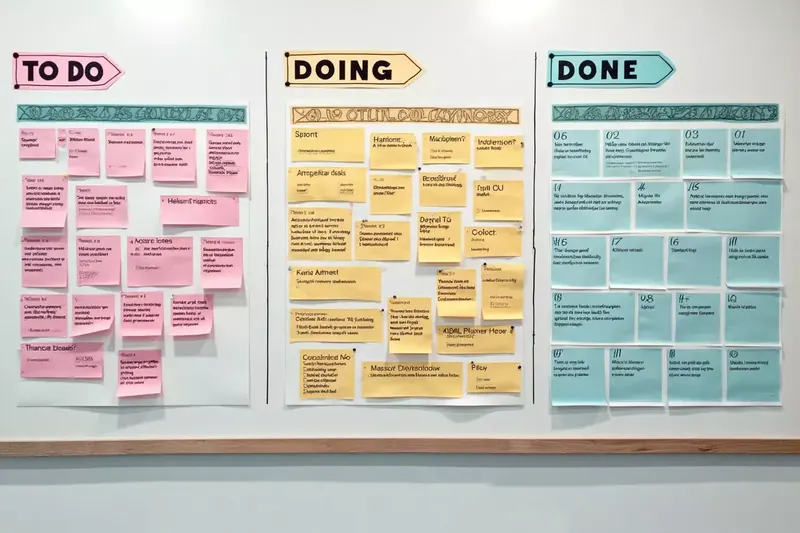
You can see what is being decided, what is being built and what has been deferred at any point. Each stage ends with something you can check.
-
Understand
Map the users, workflows, systems, constraints and business impact.
We sit with the people doing the work, follow the process as it actually runs, and write down where it breaks, who compensates for it and what that costs.
OutputWorkflow map, constraints, stakeholders and baseline.
-
Design
Agree on the desired outcome, success measures, scope and technical approach.
We agree the outcome, scope boundaries, acceptance criteria, integrations, risks and measures of success. Scope is written as outcomes with explicit exclusions, so that what is deferred is a decision rather than a surprise.
OutputDelivery plan, prioritized requirements and explicit assumptions.
-
Build
Deliver in short, visible cycles and validate important assumptions early.
The riskiest assumption is tested first. You see working software during the engagement, not a demonstration at the end of it.
OutputWorking software, decision records and visible progress.
-
Deploy
Connect the solution to the real data, tools and operating environment.
Real records, real permissions, real failure modes. Integration is treated as part of the build, not a phase to negotiate afterwards.
OutputTested integrations, migration or rollout plan, documentation and training inputs.
-
Improve
Observe usage, resolve friction and support the team operating the system.
Adoption is measured by whether people use the system without workarounds. We fix what gets in their way and document what they need to run it.
OutputMeasured findings, prioritized improvements and clear support ownership.
Beyond the prototype
Demo versus system
Prototype
- Sample data
- Isolated environment
- Manual oversight
- Unclear ownership

Production
- Real integrations
- Security and permissions
- Monitoring and fallback paths
- Documentation and handover
The working commitments behind these choices are on the About page. How we want to work
Technology decisions
What we use, what we avoid
Technology choices are made per problem. This is the default posture, not a fixed stack.
Use now
Proven in production for this class of problem.
Typed application codeManaged relational databasesAutomated CI/CDInfrastructure as code
Pilot
Promising, applied behind a clear boundary.
Retrieval-based assistantsStructured document extractionWorkflow orchestration services
Evaluate
Watching closely, not yet recommended by default.
Multi-agent orchestrationAutonomous code modificationModel-routing platforms
Avoid for this context
Poor fit for regulated or operationally critical work.
Unsupervised AI decisionsUndocumented one-off scriptsOpaque no-code chains at scale



Questions
Working with us
Anything else, ask us directly. Enquiries are usually answered within one working day.
How is this different from staff augmentation?
Staff augmentation adds capacity to a backlog the client already owns. Forward-deployed engineering shares responsibility for understanding the problem, shaping the solution, integrating it and supporting adoption.
Will we see progress during development?
Yes. Reviewable increments, decisions, risks and deferred items should remain visible throughout the engagement.
How do you handle scope changes?
Changes are assessed against outcome, risk, cost and timeline. The team makes the trade-off explicit instead of quietly absorbing work until delivery becomes unpredictable.
How do you handle handover?
Repository access, documentation, deployment, credentials, ownership and support expectations are planned before the end of the engagement.
Start with one workflow
The Opportunity Sprint is the lowest-commitment way to test whether this model fits your organisation.
Usually answered within one working day.