
In-House Product
HR work, in one connected workspace.
HRive brings employee management, attendance, leave and HR workflows together across role-specific portals—giving teams a clearer way to manage everyday work.
An in-house Vision Bridge product, developed alongside our client work.
The problem
HR work becomes harder when every process lives somewhere else.
- 01
Scattered employee information
Records and documents are difficult to find and maintain.
- 02
Manual attendance and leave work
Requests, approvals and records become fragmented.
- 03
Limited visibility for managers
Teams need relevant information without seeing everything.
- 04
Disconnected HR workflows
Repeating the same data entry slows down routine work.
How HRive works
Recruitment in HRive, step by step
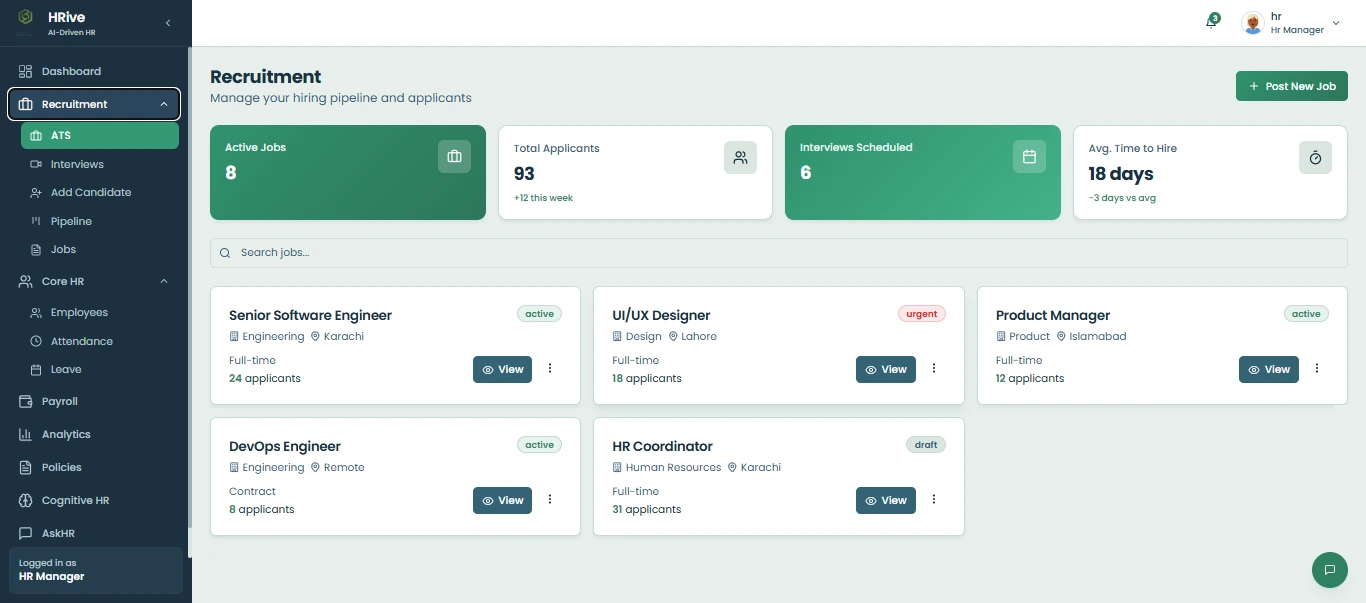
From posting a job to sending the offer, every step below is a real screen from HRive. Choose a step to see it.
HR posts a job with its department, location, type and description, and it joins the list of openings.
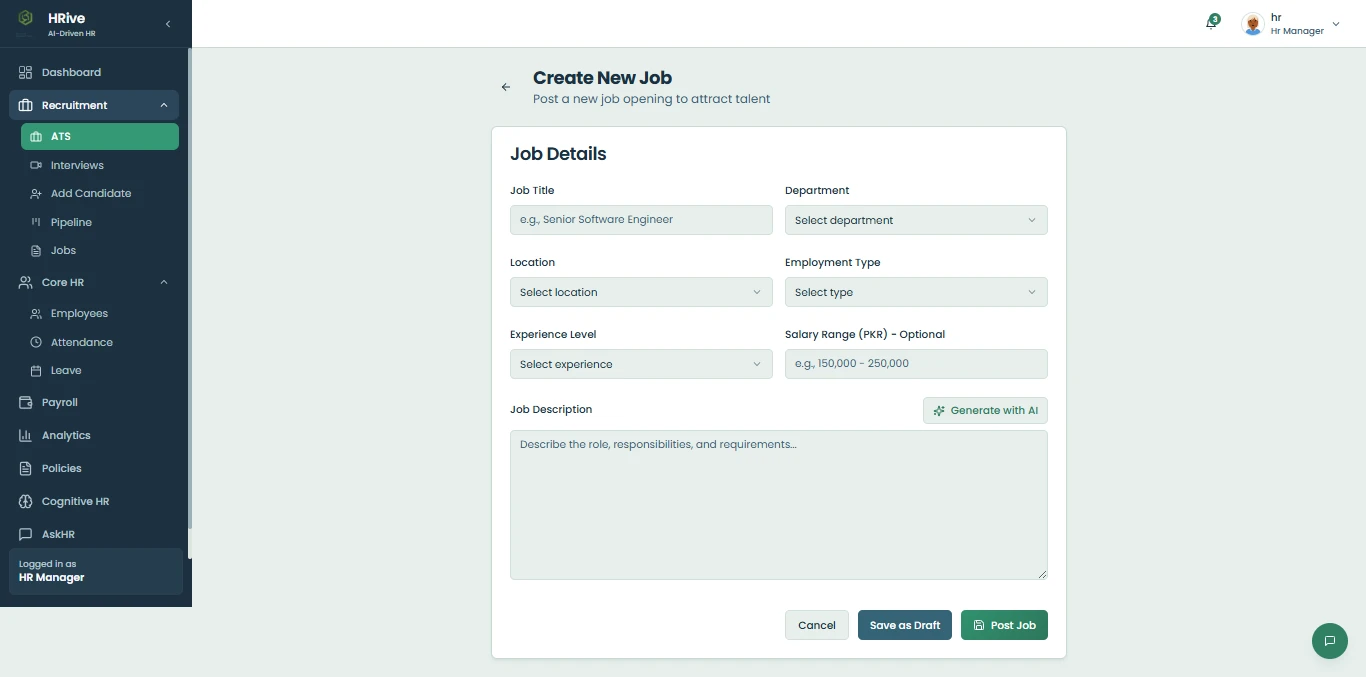
Every applicant for the role sits in one list with their experience, CV and current status.
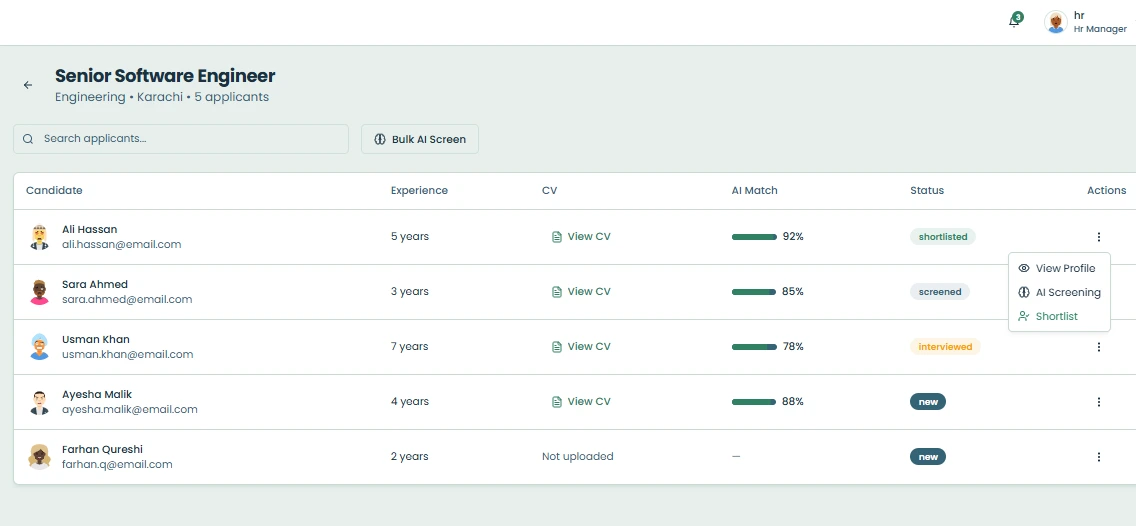
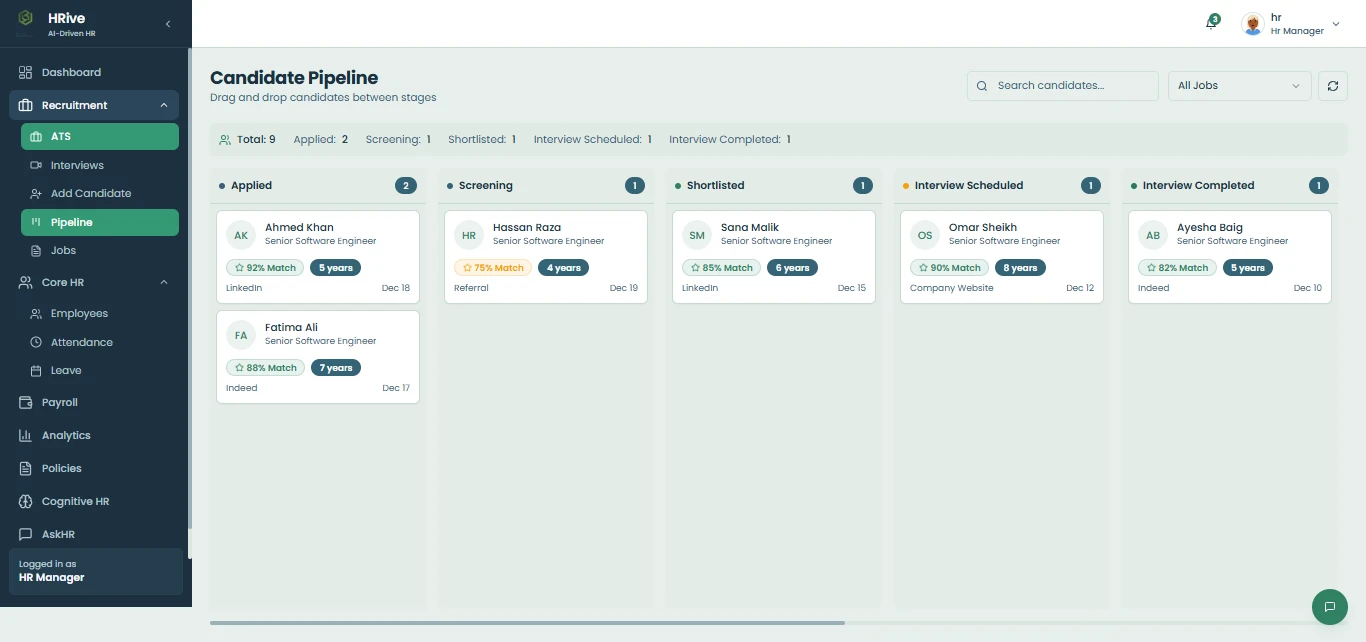
Candidates move from applied to screening, shortlist and interview on a single board.
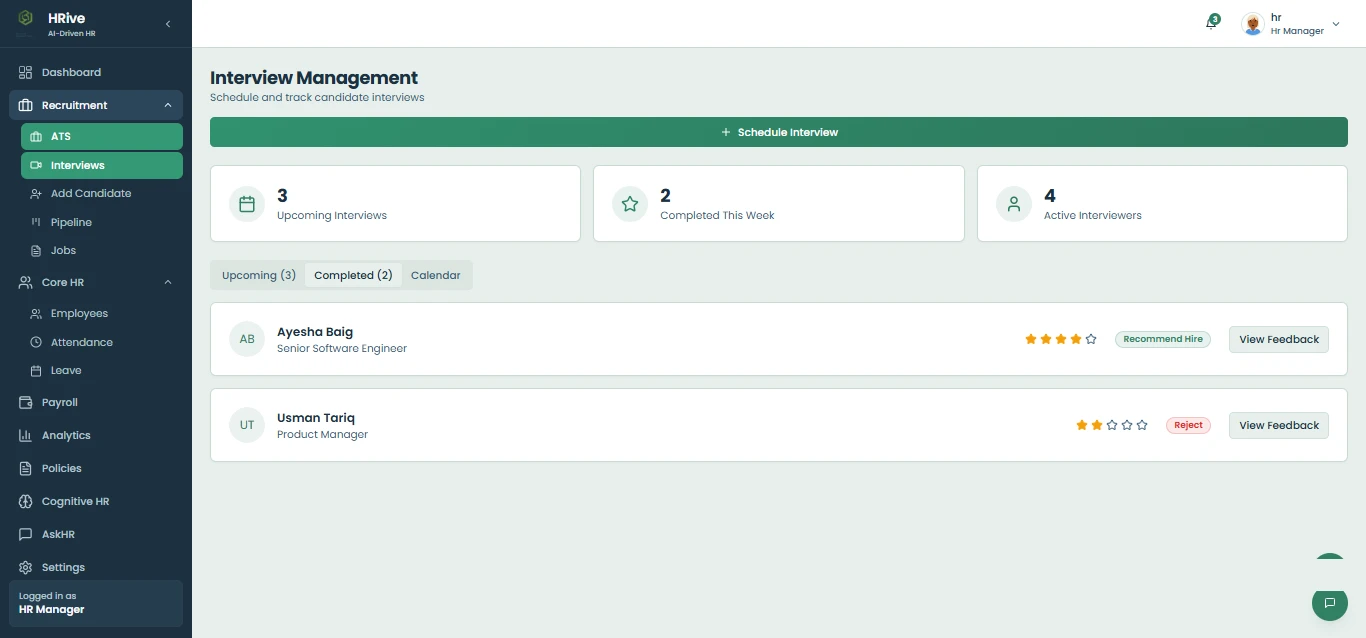
Interviews are booked with a date, type, mode and interviewer, and each one ends with a rating and a recommendation.
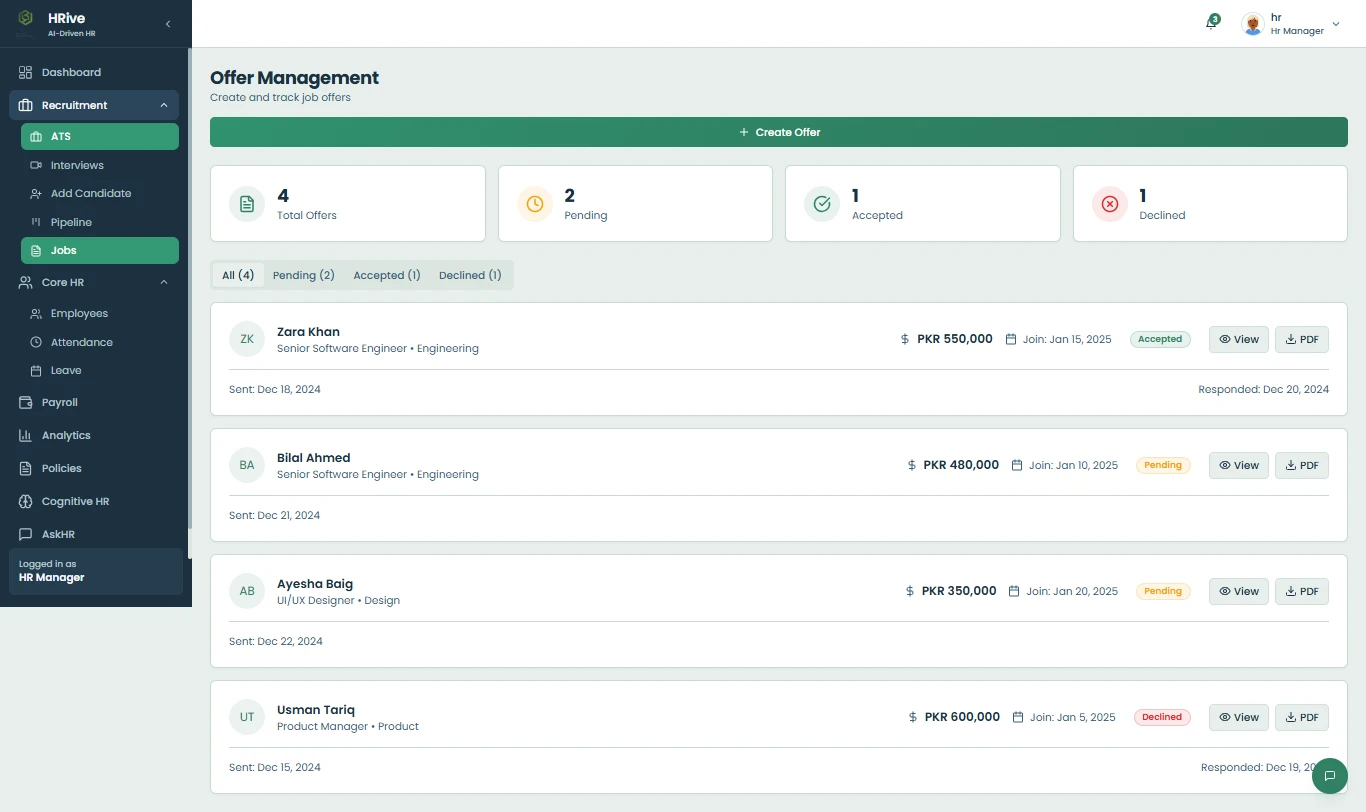
Offers are created and followed from pending to accepted or declined, without a separate spreadsheet.
Step 01 of 05 · Create a job
Modules
What HRive does today
Only modules that can be opened and demonstrated in the current build are listed here.
- Working
Employee records and role-based access
One directory of employee profiles, with each portal showing only what that role should see.
- Working
Attendance
Attendance recorded and reviewed in the same workspace as the employee record it belongs to.
- Working
Leave requests and approvals
Employees submit, managers decide, and HR sees the outcome — without the email chain.
- Working
HR and manager dashboards
A working overview for HR and for each manager, scoped to the people they are responsible for.
- Working
Recruitment
Job openings, applicants, a candidate pipeline, interview scheduling with feedback, and offer tracking.
Product gallery
The real interface
Captured from HRive’s recruitment module running on sample data. Select any screen to enlarge it.
Architecture
How the platform is put together
- Layer 1
Role-based web portals
Admin, HR, manager and employee views
- Layer 2
Application / API layer
Business rules, approvals and permissions
- Layer 3
HR records and workflow data
Employees, attendance, leave and requests
- Layer 4
Dashboards and reporting
Role-scoped overviews for HR and managers
Role permissions
Each person signs in to a portal for their role and sees only the records that role is allowed to see.
Authenticated access
Every portal sits behind sign-in; nothing in HRive is reachable anonymously.
About the project
Our own product, built the way we build for clients
HRive is an in-house Vision Bridge product. It is where we work through role-based access, approvals and HR workflows on a platform we own — a real product we can open and demonstrate, rather than a concept on a slide.
The same approach carries into client work: we build internal tools and business platforms around the roles and approvals a team already has, and SaaS products when the platform is the product.
Questions
About HRive
Is HRive a client project?
No. HRive is an in-house Vision Bridge product — ours, developed alongside client work, not something delivered for a client.
Which parts of HRive are working today?
Employee records with role-based access, attendance, leave requests and approvals, the HR and manager dashboards, and recruitment — from job openings to offers. Other modules are listed only once they have been checked in the running product.
Can Vision Bridge build an HR platform like this for our team?
Yes. We design and build internal tools around how a team actually works — its roles, approvals and records — and integrate them with the systems already in place.
Next step
Need a platform built around your team’s workflow?
Vision Bridge designs and builds internal tools and business platforms around real operational needs.